President · 1999–2007 · PDP
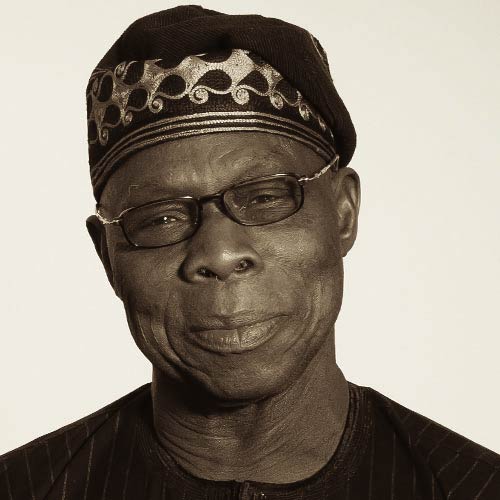
Olusegun Obasanjo
Eight years, $138.6 billion added to GDP, and the Paris Club deal that wrote off $18 billion in external debt — the largest debt write-off in African history.
Headline figures
+$138.6B
GDP added
$171.1B → $309.7B (constant 2015 USD). 7.7% CAGR.
−$11.6B
External debt change
$29.1B → $17.5B. Only president to leave debt lower than inherited.
+45%
GDP per capita growth
$1,390 → $2,021. Most prosperity gain per citizen of any modern era.
2 / 2
Elections won
1999 (62.8%) · 2003 (61.9%). Both decisive.
The defining act
The 2005 Paris Club settlement
In October 2005, Nigeria reached a $30 billion settlement with the Paris Club of creditor nations. The deal: pay $12.4 billion in cash, get $18 billion written off. External debt dropped from $46 billion (2004) to $17.5 billion (2006). Government debt as a share of GDP fell from 46% to 5.8%. The fiscal space this opened up financed the early 2000s growth boom and remains the single largest debt restructuring in sub-Saharan African history.
The economy
1999 → 2007GDP
$171.1B → $309.7B
+$138.6B added over 8 years. Compound annual growth: 7.7% — the highest sustained rate of any administration since 1996. Oil prices rose from $18/barrel to $72/barrel over the same period.
GDP per capita
$1,390 → $2,021
+$631 per citizen. 4.8% CAGR. The only Fourth Republic administration where per-capita prosperity grew faster than population.
Services sector
+89%
9.5% CAGR. Anchored by the GSM telecom revolution after the 2001 spectrum auction. Mobile subscriptions grew from ~20,000 to over 50 million.
Agriculture
+117%
11.7% CAGR. Public investment in fertilizer and seed programs. Cassava initiative and palm-oil revival. Best agricultural decade since independence.
Manufacturing
+9.8%
1.4% CAGR. Modest. Manufacturing did not benefit from the oil boom — a structural weakness that compounded later.
Foreign direct investment
+19.8%
Concentrated in oil and gas. Telecoms attracted material non-oil FDI for the first time in decades.
The debt
External + governmentExternal debt stock
$29.1B → $17.5B
A net $11.6 billion reduction. The only Nigerian president since 1996 to leave external debt lower than he found it. Full comparison →
Gov debt as % of GDP
46% → 6%
IMF data. Reset from a deeply indebted starting position to a near-clean balance sheet by 2007 — the inheritance for Yar'Adua's three years.
Total debt service paid
~$28.5B
Approximately $3.6 billion per year in principal + interest on external debt over the 8 years. Most concentrated in 2005–2006 around the Paris Club payments.
Average oil price
~$35/barrel
Range: $18 (1999) to $72 (2007). Without this favorable environment, the Paris Club deal would have been politically much harder.
How he won
1999 · 20031999 — The handover
62.8%
Obasanjo (PDP): 18,738,154 votes. Olu Falae (AD–APP): 11,110,287 (37.2%). First election since 1993. 25.6pp margin.
2003 — The re-election
61.9%
Obasanjo (PDP): 24,456,140 votes. Buhari (ANPP): 12,710,022 (32.2%). First civilian re-election. 29.7pp margin. Full election table →
What he left behind
Legacy
01
$18 billion of debt erased. The 2005 Paris Club settlement is the largest sovereign debt write-off in African history. The fiscal space it created shaped the next 18 years.
02
GSM auction (2001). Selling mobile spectrum to four operators sparked a telecom revolution: mobile subscriptions went from ~20K to over 50M in 8 years. The single largest non-oil economic transformation of his tenure.
03
EFCC and ICPC. Two new anti-corruption agencies. Mixed enforcement record, but the institutional groundwork was laid for every future administration.
04
Bank consolidation (2004–05). Soludo's CBN forced banks to recapitalize from N2B to N25B minimum. 89 banks became 25. Sets up the modern Nigerian banking sector.
05
The third-term bid. Failed 2006 attempt to amend the constitution for a third term. National Assembly rejected it. A precedent-setting institutional pushback against incumbent overreach.
06
First civilian-to-civilian transition (2007). Handed over to Yar'Adua — the first time in Nigerian history one elected civilian succeeded another. Disputed election, but the handover itself was a milestone.
Year by year
GDP, debt, governance| Year | GDP ($B, const 2015) | External debt ($B) | Gov debt / GDP | Oil price (avg) |
|---|---|---|---|---|
| 1999 | 171.1 | 29.1 | 46.1% | $18 |
| 2000 | 179.7 | 33.5 | 40.9% | $28 |
| 2001 | 190.3 | 35.0 | 37.7% | $24 |
| 2002 | 219.5 | 36.8 | 30.7% | $25 |
| 2003 | 235.6 | 41.9 | 29.9% | $29 |
| 2004 | 257.4 | 45.9 | 25.2% | $38 |
| 2005 | 274.0 | 33.7 | 13.4% | $55 |
| 2006 | 290.6 | 17.5 | 6.7% | $66 |